Most homeowners only think about the air filter when the system starts smelling dusty or the airflow feels weak. But the filter is more than an “air quality add-on” — it’s one of the simplest parts that protects the most expensive parts. If you’re wondering how long can you run HVAC without filter, the short answer is: the system may still run, but it’s a risky choice that can quickly turn into dirty coils, strained motors, and higher bills.
Can You Run HVAC Without A Filter in an Emergency?
In a real-life emergency, people remove a filter for understandable reasons: the old one is soaked, collapsed, or so clogged the system can barely move air; you can’t find the right size in the store; a delivery is late; or you’re trying to keep the house safe during extreme heat or cold. The system will still blow air without a filter, but that doesn’t mean it’s “fine.” The filter is the barrier that keeps dust, lint, pet hair, and construction particles from coating the indoor coil and blower assembly.
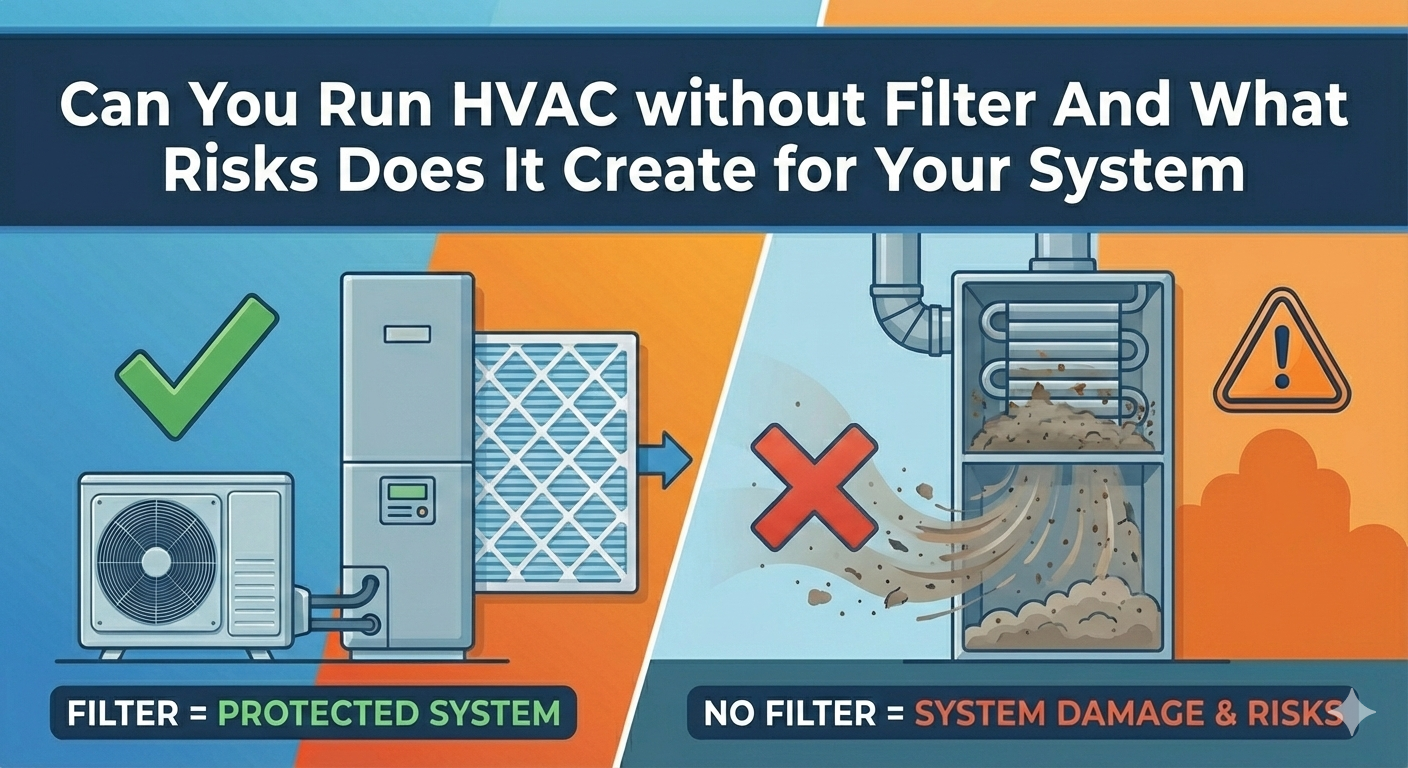
Here are the most common risks that show up when the system runs with no filter:
- Dust and lint collect on the blower wheel, reducing airflow and efficiency over time.
- The evaporator coil starts trapping debris, which can lead to icing in cooling mode.
- Indoor air quality can worsen because particles keep recirculating through the home.
- Return ducts and the air handler interior get dirty faster, increasing future cleaning costs.
- Sensitive electronics and sensors can be exposed to more contamination and moisture films.
- A dirty system can run longer to reach temperature, which pushes energy use up.
The key takeaway is that “it ran” doesn’t mean “it’s safe for the equipment.” If you truly must run the system briefly, treat it like a temporary survival step—not a normal operating mode—and make getting the correct filter the top priority.
Can You Run an HVAC Without a Filter And What Gets Damaged First?
When people picture “damage,” they imagine something snapping or burning out in one night. What actually happens is usually slower and more expensive: performance drops a little, run time increases a little, and the system starts operating outside the clean, efficient conditions it was designed for. The first places that get affected are the ones built to transfer heat and move air. Those surfaces work best when they’re clean. Once they’re coated in dust, they become less efficient, and the system has to work harder to do the same job.
A few components tend to “pay the price” first when filtration is missing:
- The evaporator coil becomes a dust magnet and can lose airflow capacity quickly.
- The blower wheel can become unbalanced and move less air with more strain.
- The blower motor can run hotter or work harder as airflow pathways get restricted.
- The condensate system can collect more sludge, increasing the chance of clogs and leaks.
- The duct system can accumulate debris that later re-enters the living space as “mystery dust.”
Once debris gets into these areas, replacing the filter later doesn’t undo what already stuck to the equipment. That’s why running without a filter isn’t just an air-quality issue—it’s a maintenance and efficiency issue that can snowball into service calls.
Can You Run Your HVAC Without a Filter if You’re Waiting on Delivery?
This is the most common scenario: you ordered filters, they haven’t arrived, and the weather is uncomfortable. The temptation is to “just run it for a day.” The problem is that HVAC systems don’t know the difference between “just one day” and “normal operation.” If the blower is pulling air constantly and your home has typical dust, cooking particles, pet dander, or lint, the system can start collecting that debris immediately.
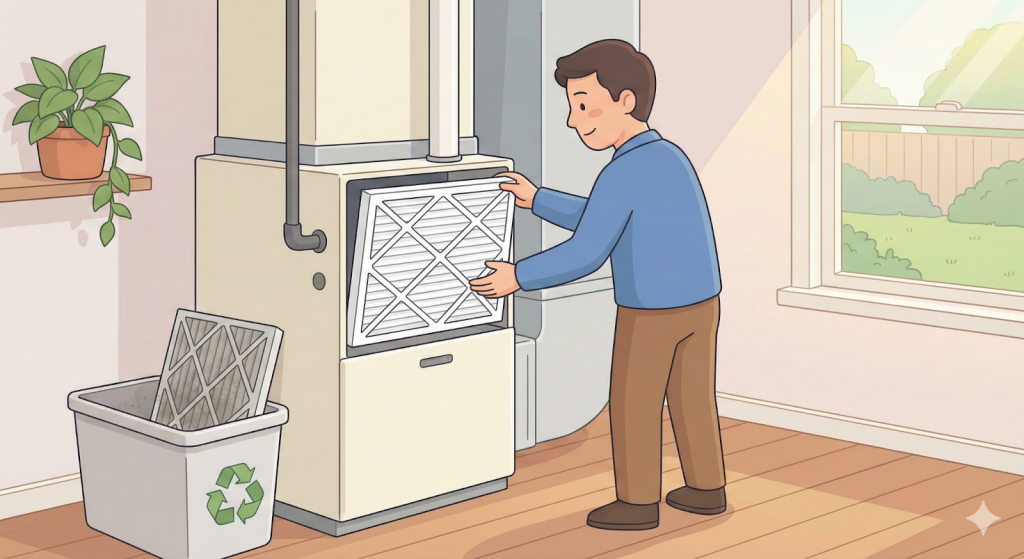
If you’re in this situation, the smartest approach is to reduce exposure rather than accept full risk. If you’re asking can you run HVAC without a filter, it’s better to treat it as a last-resort option and minimize how much unfiltered air the system pulls through. First, check whether your system has more than one filter location (some homes have a filter at the return grille and another at the air handler). Make sure you’re not overlooking one. Next, consider whether you can use a correct-size filter that’s “not your favorite” temporarily—meaning a basic filter that fits properly and keeps airflow reasonable—until the preferred filters arrive.
Also, if comfort allows, reduce runtime. Instead of keeping the fan set to “ON” all day, use “AUTO” so the blower runs only when heating or cooling is actively needed. And if the house is safe without constant conditioning, turning the system off for stretches is often better than running it unprotected. Waiting a few hours is cheaper than paying for coil cleaning or dealing with airflow problems later.
How Long Can You Run HVAC Without a Filter Before Problems Show Up?
There isn’t one universal clock that applies to every home, because the risk depends on what’s in the air and what your system is pulling in. If you’re asking can you run your HVAC without a filter, the real answer is that it depends on how quickly debris will be pulled into sensitive components. A clean home with minimal dust and no pets is very different from a home with pets, heavy cooking, ongoing remodeling, or high outdoor dust/pollen. System design matters too: the tighter and cleaner the ductwork, the less debris gets pulled from wall cavities or basements.
What you can say with confidence is this: the longer it runs without a filter, the more material is guaranteed to end up somewhere inside the system. The issue isn’t “will dirt get in?”—it will. The issue is how quickly that dirt starts affecting airflow and heat transfer. Coils and blower wheels don’t need inches of dust to lose performance.
A thin film can change how air moves and how well heat transfers, and that can translate into longer cycles, reduced comfort, and a higher chance of icing (in cooling) or overheating shutoffs (in heating). If you’re asking can you run HVAC without filter, the safest practical answer is: avoid it if at all possible, and if you must do it, keep it to the absolute minimum time required to maintain safety in extreme conditions.
How Long Can You Run HVAC Without Filter If You Use A Temporary Solution?
If you’re stuck between uncomfortable weather and no filter on hand, the best move is not to “tough it out without a filter,” but to switch to a temporary option that still provides basic protection. The goal is simple: keep debris out of the air handler and coil until you can install the proper filter. A temporary solution should never block airflow so much that it creates new problems, and it should fit securely so air can’t bypass it.
Here are safer alternatives to running the system with no filter at all:
- Install a correctly sized basic filter temporarily, even if it’s not your preferred rating.
- Use the system on “AUTO” fan mode to reduce unnecessary air movement and dust pull.
- Keep return grilles clear and avoid activities that add airborne particles, like sanding or sweeping dust.
- If the home is safe, reduce runtime by using gentle setpoint adjustments instead of extreme temperature changes.
- Schedule filter delivery or pickup the same day if possible, treating it as a priority item.
A good temporary plan does two things: it protects the equipment today and prevents a “small” missing-filter situation from turning into a cleaning, icing, or airflow problem next week. If you’re asking how long can you run HVAC without a filter, the safest answer is: only for the shortest time absolutely necessary. Once the correct filter is installed, pay attention for a few days—if airflow seems weaker than normal or the system starts cycling oddly, it may be worth scheduling a maintenance check to make sure the coil and blower stayed clean.
Protect Your System: The Smart Conclusion on Running HVAC Without a Filter
Running without a filter is one of those choices that can feel harmless at the moment—especially if the weather is extreme or a delivery is late—but it has a clear downside: the “mess” doesn’t disappear, it just moves into the equipment. The longer the system operates unprotected, the more dust and debris gets pulled into the blower, coil, and return side of the ductwork, which can quietly reduce efficiency and raise the risk of icing, overheating, or costly cleaning later.
If you truly have no option, keep the runtime as short as possible, avoid running the fan continuously, and treat installing the correct filter as urgent. If you’re wondering can you run an HVAC without a filter, the practical answer is that it may run, but you’re increasing the chance of dust buildup on the blower and coil with every hour it operates unprotected. In most cases, the safest and cheapest strategy is simple: use a properly sized temporary filter now, then upgrade to your preferred option once it arrives—because protecting the system is always easier than repairing what unfiltered air leaves behind.