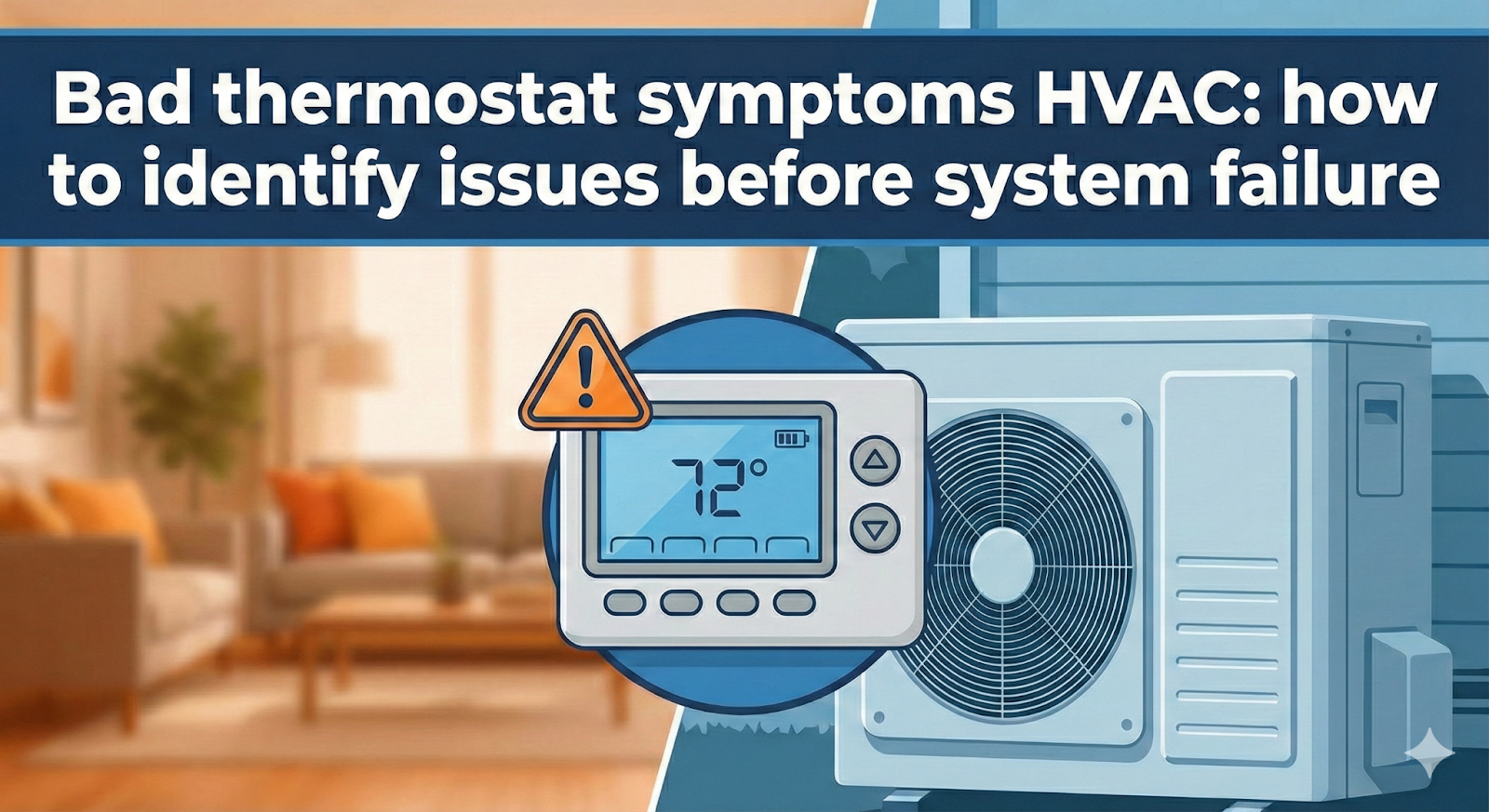
A thermostat is the “traffic controller” for your heating and cooling: it decides when the system starts, how long it runs, and when it stops. When it begins to fail, your HVAC can look broken even if the equipment is still fine. The trick is catching the symptoms of a bad thermostat HVAC early — before extra cycling, uneven comfort, and wasted runtime turn into real wear and sudden shutdowns.
Bad HVAC Thermostat Symptoms that Usually Show Up First
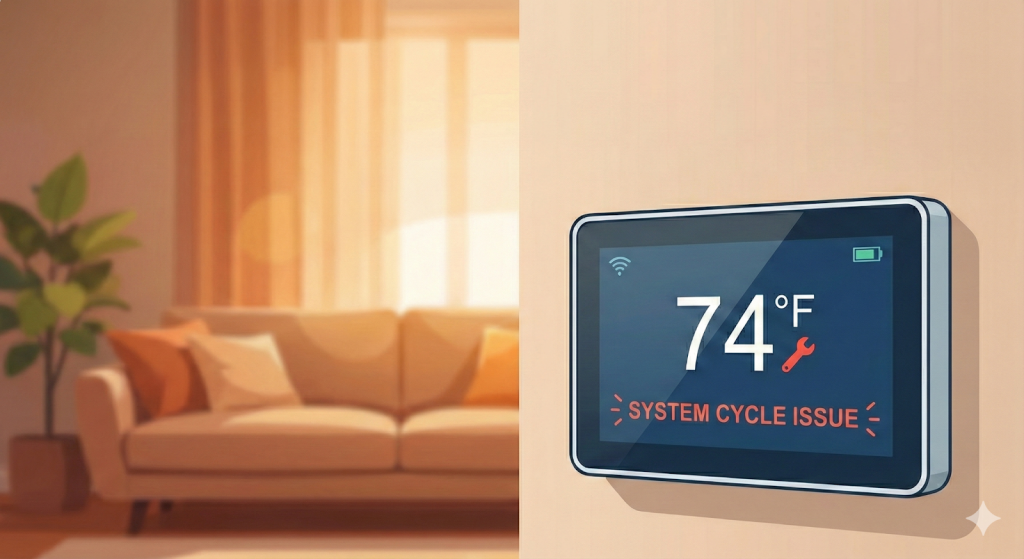
Most bad thermostat symptoms HVAC don’t begin with a dramatic “system won’t turn on” moment. They start as subtle comfort drift: the room feels a little warmer or cooler than expected, the system reacts late, or it runs at odd times that don’t match your routine. That’s why these symptoms of a bad or failing HVAC thermostat matter — equipment is designed for steady, intentional cycles.
Before you assume “the AC is dying,” watch for these early signals:
- The system feels “moody”: comfort swings without a clear weather change.
- The unit runs at unexpected times, even when the schedule should be stable.
- You need to change the setpoint more often to get the same comfort.
- The fan behavior feels inconsistent (runs when you didn’t ask, or won’t run when you do).
- Energy usage jumps while your habits stay the same.
If you recognize two or more points from the list, treat it as a pattern, not a one-off. A single weird day can happen, but repeated “off” behavior usually means the thermostat is no longer controlling the system cleanly.
Symptoms of A Bad HVAC Thermostat You Can Spot without Tools
Bad HVAC thermostat symptoms often show up as inconsistency between what you set and what you get. Pay attention to response behavior: when you change the temperature by a few degrees, does the system react within a reasonable time, or does it ignore the change and then “overreact” later? Another clue is stability: in a healthy setup, the indoor temperature should gradually move toward the setpoint and then hover near it.
A practical home checklist to capture the right clues:
- The display is blank, dim, flickering, or slow to respond.
- The temperature shown on the thermostat doesn’t match how the room feels, even after waiting.
- The system turns on, but comfort changes too slowly or unevenly across rooms.
- The system runs longer than expected, or keeps running past the setpoint.
- Settings or schedules “reset” or change without you doing anything.
- The system starts and stops far more often than it used to during mild weather.
This checklist is useful because it’s based on what you can observe reliably, without guessing what’s happening inside the unit. If you’re preparing for a service call, these exact notes help a technician separate thermostat problems from airflow, refrigerant, or equipment issues.
Symptoms of Bad HVAC Thermostat that Trigger Short Cycling
Short cycling means the system turns on, runs briefly, shuts off, and repeats—sometimes many times per hour. If the thermostat is the cause, it’s often because the sensor is reading temperature inaccurately, the thermostat is placed in a problematic spot (sunlight, drafts, near a supply vent), or control signals aren’t stable.
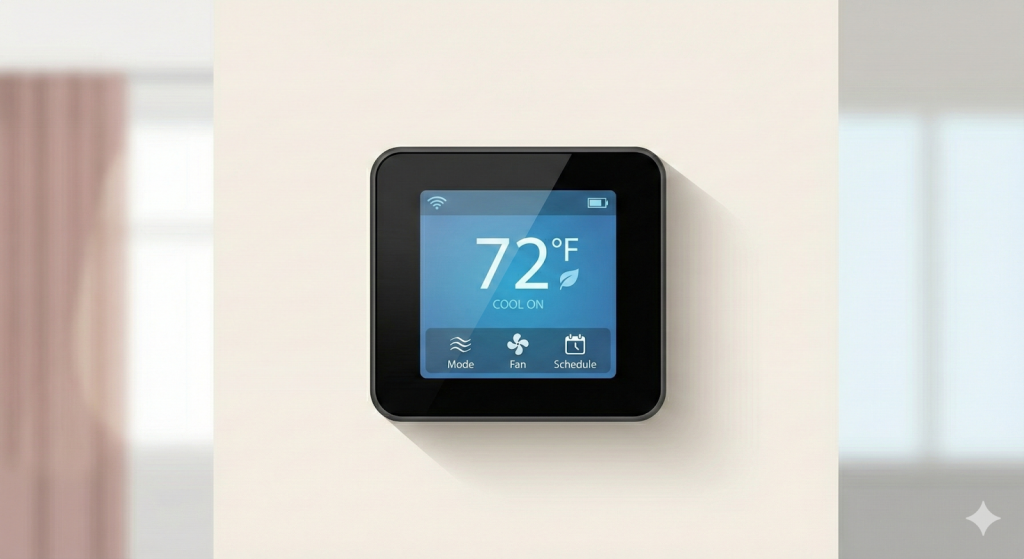
If you suspect short cycling, look for these patterns:
- The system runs only a few minutes per cycle and repeats frequently.
- Comfort never stabilizes; it feels like the house is always “catching up.”
- You hear more frequent start-up sounds than normal.
- Humidity feels worse even though the AC is technically running.
- You see higher bills without a clear reason.
If this describes your situation, don’t delay. Short cycling is one of the fastest ways a control issue becomes a real equipment issue. Even if the thermostat is only part of the problem, fixing it early can reduce wear.
Symptoms For a Bad HVAC Thermostat When The Temperature Reading Is Off
When the thermostat’s reading is wrong, the whole system makes the wrong decisions. A few degrees of sensor drift can lead to long runtimes (wasted energy) or short runtimes (uneven comfort). Causes can include aging sensors, dust inside the thermostat, loose mounting, or placement near heat sources and cold influences.
A quick way to think about it: if the thermostat is “lying,” the HVAC will behave logically based on that lie.
- The system shuts off while the room still feels uncomfortable.
- The system keeps running even though the room already feels comfortable.
- The displayed temperature changes in odd jumps rather than steady movement.
- Comfort problems get worse at certain times of day (sun hits the wall, evening drafts).
- You feel fine in one area, but the thermostat location feels like a different climate.
Once you suspect the reading is off, the goal is to avoid constant setpoint changes that create even more cycling. Instead, note when the mismatch is strongest (time of day, sunlight, cooking, drafts) and consider whether thermostat placement is a factor.
Symptoms of a Bad or Failing HVAC Thermostat And Safe Checks Before You Call
You don’t need to pull wires or do advanced diagnostics to learn a lot about symptoms of bad HVAC thermostat. Safe checks are about eliminating common “false alarms” and confirming whether the thermostat is likely the culprit. If you’re ever unsure, skip anything that involves wiring and move to professional help.
Try these steps in order, because the early ones are the easiest wins:
- Confirm mode (Heat/Cool/Auto) and fan setting, and set the temperature clearly above/below room conditions.
- Replace batteries if your thermostat uses them, then wait a few minutes for a response.
- Clean dust gently from the thermostat surface and any sensor vents with a soft cloth.
- Make sure the thermostat is firmly seated on its base and not loose on the wall.
- Check your HVAC breaker; if it trips again, stop and contact a professional.
- Use the thermostat’s reset function (if your model supports it) to clear glitches.
- Write down the symptoms of a bad HVAC thermostat, times, and what you tried, so a technician can diagnose faster.
These steps won’t replace professional diagnostics, but they can remove the most common “noise” that makes thermostat issues confusing. If the system starts behaving normally after batteries/reset/settings correction, you may have avoided an unnecessary service visit.
Symptoms of a Bad Thermostat HVAC: Cost, Service Calls, and Replacement Choices
Cost usually depends on two things: how quickly you act and how complex your system is. If the issue is simple (dead batteries, incorrect configuration, loose mounting, a basic thermostat swap), the fix can be relatively affordable. Costs rise when the thermostat problem has been causing heavy cycling for weeks or when the home has a multi-stage system, heat pump setup, or smart thermostat requirements that demand extra configuration and compatibility checks.
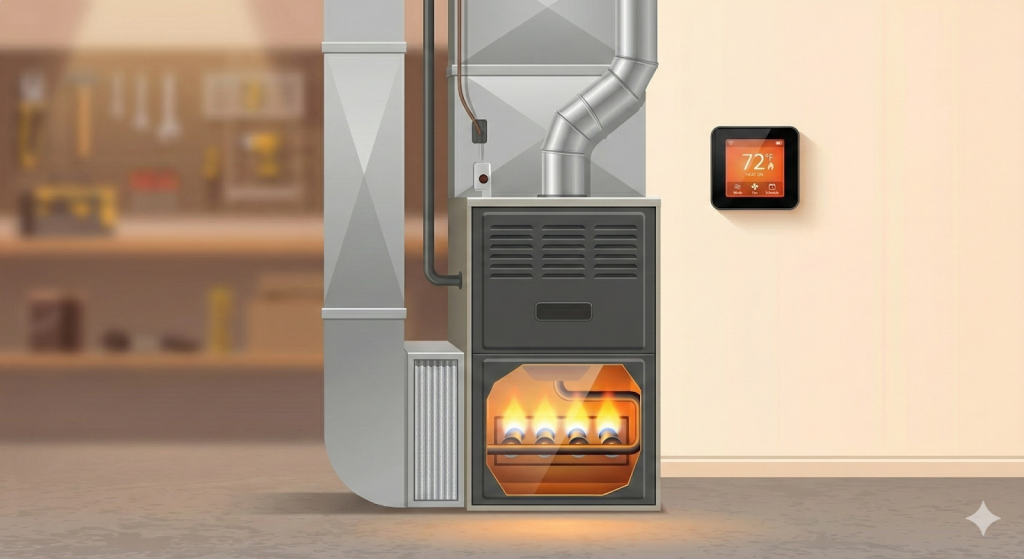
Typical thermostat replacement ranges can vary widely depending on the model and labor, with some cost guides placing full replacement in the rough ballpark of $80–$440, while service call/diagnostic fees are commonly around $75–$200. A good budgeting mindset is: pay for clarity first, then decide repair vs. replacement.
Cost table of typical U.S. ranges:
| Scenario | Typical range | Best for | Notes |
| Diagnostic / service call | $70–$200 | Confirming the real cause | Often credited toward repair by some contractors. |
| Basic thermostat installation | $114–$264 | Straightforward swaps | Often depends on wiring and compatibility. |
| Full thermostat replacement (materials + labor) | $80–$440 | Old or unreliable thermostats | Wide range by type and location. |
| Replacement (site-variable estimate example) | $391–$469 | Some markets/conditions | Can vary with site conditions and options. |
| Smart/programmable upgrade (installed) | $150–$500 | Convenience + efficiency features | Range depends heavily on model and install complexity. |
The table is meant as a planning tool, not a promise—your local market, HVAC type, and wiring situation can shift the final number.
Conclusion
Thermostat problems rarely start as a clean “it broke.” More often, they appear as small inconsistencies—odd cycling, comfort drift, schedule weirdness, or readings that don’t match reality. If you catch those patterns early and run a few safety checks (settings, batteries, reset, placement factors), you can prevent unnecessary wear and avoid a surprise no-heat/no-cool situation. And if the symptoms for a bad HVAC thermostat persist, a short, well-documented description of what you observed helps a technician diagnose faster and fix the real problem without guesswork.