A check valve is a simple “one-way door” for fluids or air. In an HVAC system, that one-way behavior can protect equipment, prevent backflow, stop unwanted circulation, and help a system behave predictably in different operating modes.

But check valves also get blamed for problems they didn’t cause—because when a one-way device sticks, leaks, or is installed backward, the symptoms can look like a pump failure, a comfort complaint, or even “mysterious” airflow. In this guide, we’ll unpack what a check valve HVAC component actually does, where you’ll see it, and the installation mistakes that cause the most headaches.
HVAC Check Valve: What It Does And Why It Matters
An HVAC check valve is used any time designers want flow to move in only one direction. “Flow” could mean refrigerant, water, condensate, or even airflow in certain duct situations. The purpose is usually practical: keep a pump from spinning backward when it shuts off, prevent gravity circulation that overheats a zone, keep refrigerant moving the right way through a circuit, or stop outside air from pushing backward through a vent.
One easy way to think about it is cause and effect. A check valve doesn’t create heating or cooling by itself; it shapes how the system behaves when pressures change. When installed correctly, it can reduce nuisance noise, stabilize temperatures, and protect equipment. When it’s installed poorly—or selected without thinking through pressure drop and “cracking pressure”—it can restrict flow or allow unintended backflow that the rest of the system was never designed to handle.
HVAC Check Valves: Common Types And Where You’ll Find Them
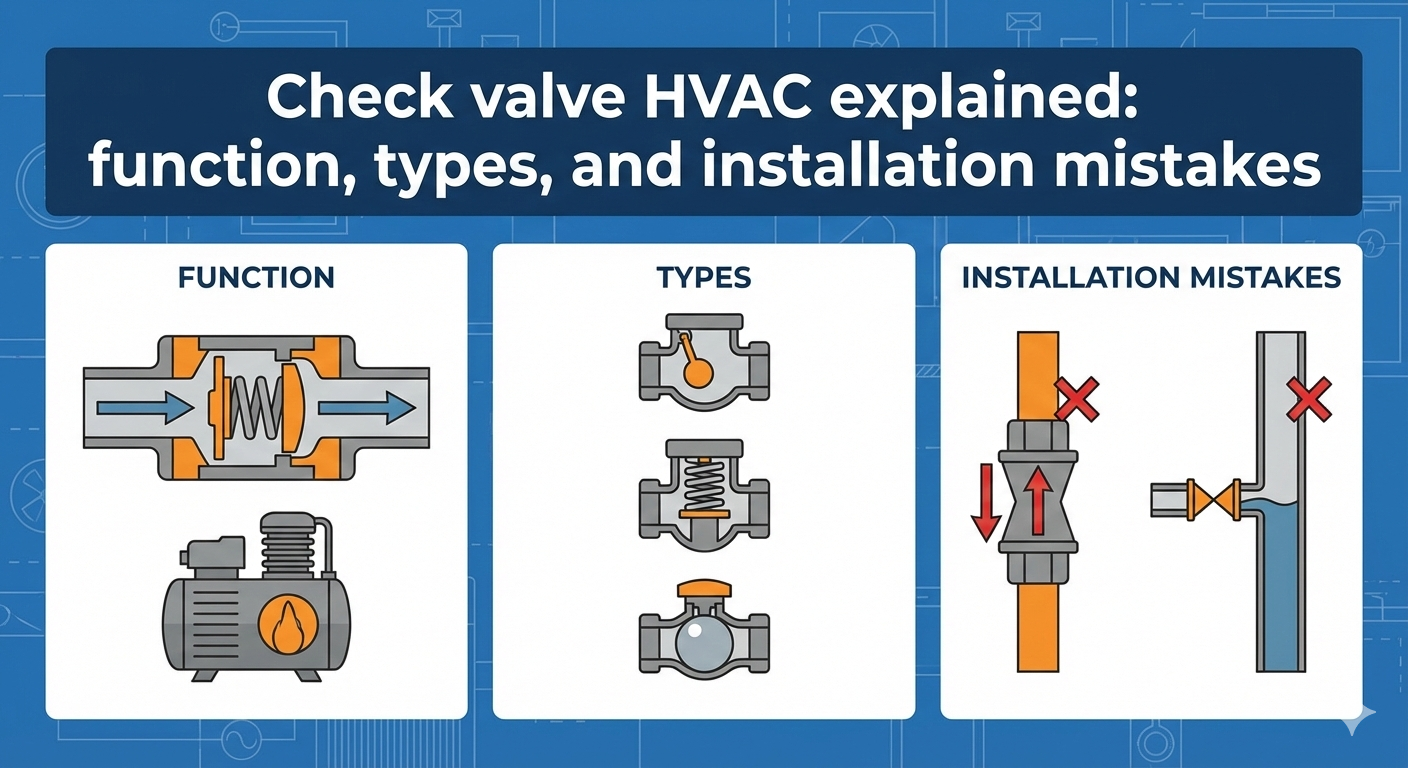
The term HVAC check valves covers a family of designs. Some are built for water systems, some are for refrigerant circuits, and some are essentially “airflow check valves” (more commonly called backdraft dampers). What they all share is the one-way mission, but the internal mechanism changes depending on the job: a spring-loaded poppet opens under forward pressure, a swing flapper opens like a door, a ball lifts off a seat, or a diaphragm flexes.
Here’s a practical way to map common check-valve types to HVAC-style use cases:
- Spring-loaded (poppet) check valves tend to be compact and can work in multiple orientations, but they add more resistance than some other styles because the spring must be pushed open.
- Swing check valves usually have lower pressure drop, but they can be noisy (“slam”) and are more sensitive to orientation and turbulence.
- Ball check valves can be simple and effective for certain fluids, but they’re not always ideal where debris can interfere with the sealing surface.
- Pump check valves are designed to prevent reverse flow and backspin in pumped loops, which can help reduce unwanted circulation after the pump shuts off.
- Backdraft dampers act like check valves for air rather than liquids, helping prevent reverse airflow in certain duct runs.
If you’re troubleshooting, remember this: two check valves that look similar on the outside can behave very differently once installed. A valve that works beautifully on a clean, steady-flow hydronic loop might be the wrong choice for a duct application, and a valve that’s fine for refrigerant might be totally inappropriate for water or condensate.
HVAC Duct Check Valve: What It Really Is In Homes
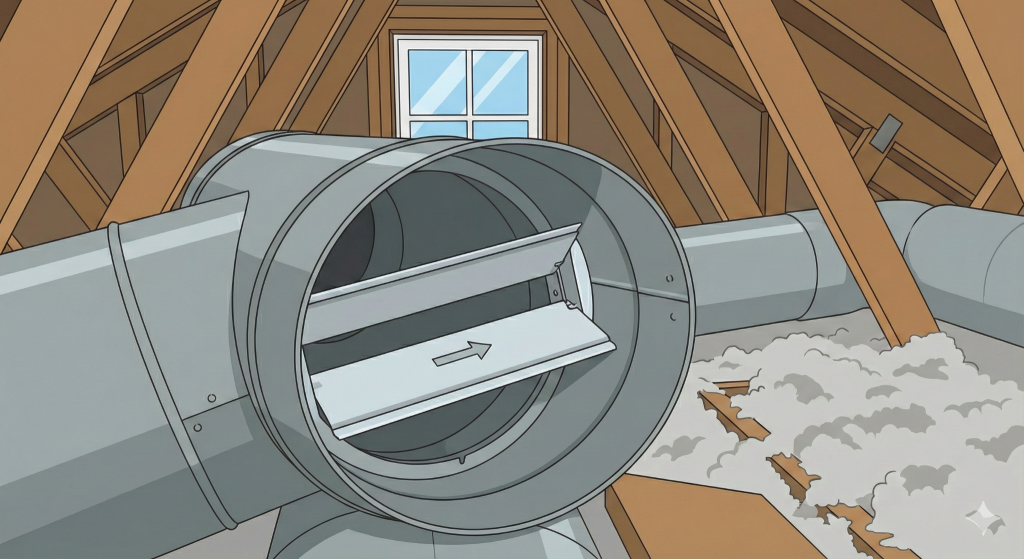
An HVAC duct check valve is usually not a “valve” in the plumbing sense—it’s typically a backdraft damper installed in ductwork. You’ll see these on exhaust ducts, fresh-air intakes, and sometimes on certain venting paths to reduce unwanted backflow. The idea is simple: when the fan runs, the damper opens; when the fan stops, it closes to keep outside air, odors, or wind pressure from pushing backward into the home. In practice, these dampers can also help with comfort by reducing drafts and uncontrolled infiltration.
Where homeowners run into trouble is expectations. A backdraft damper is not a cure-all for smells or pressure problems, and it isn’t always silent. If it’s undersized, installed too close to turbulence, or forced to fight strong wind pressure, it can flutter, rattle, or fail to seal well. In colder climates, condensation and frost can also interfere with movement. If your bathroom fan suddenly feels “blocked” or unusually loud, a sticking backdraft damper is a realistic suspect—but you still want to confirm airflow and vent termination conditions before blaming the damper alone.
HVAC Vacuum Check Valve: Why One-Way Protection Matters For Control Systems
An HVAC vacuum check valve is most commonly discussed in the context of vacuum-controlled systems—especially in automotive HVAC and some niche control setups where vacuum is used to move or hold an actuator position. The one-way function helps “store” vacuum so controls don’t lose their position when engine load changes or when supply vacuum drops briefly. In simple terms: it keeps vacuum from bleeding off backward, which would otherwise cause doors to drift and airflow to switch modes unexpectedly.
The key point for homeowners is clarity: most modern residential HVAC systems don’t use vacuum lines to control dampers the way older vehicles do. Residential systems are typically controlled electrically through thermostats, control boards, relays, and actuators. You may actually be dealing with a different kind of check device, or you may be referencing a specific piece of equipment that truly does use vacuum logic. The keyword is common, but the application depends heavily on the system type.
HVAC Control Vacuum Check Valve: Failure Symptoms People Mistake For Bigger Problems
A failing HVAC control vacuum check valve usually creates symptoms that feel random: controls that don’t hold their setting, airflow that changes modes by itself, or performance that’s fine at one moment and wrong the next. That’s why it’s often misdiagnosed as an electrical failure or a broken actuator. The truth is that vacuum-control issues are often about leaks and “not holding” rather than a hard mechanical break.
Even if your system isn’t vacuum-based, the lesson transfers: when any one-way control component leaks internally, the system can behave unpredictably. The safest troubleshooting approach is to confirm what type of control system you actually have first. Once you know the control type, you can avoid chasing the wrong category of parts. In other words, identify the system architecture before you assume the failure mode.
Installation Mistakes That Make Check Valves Noisy, Restrictive, Or Unreliable
Most check valve problems are either selection mistakes (wrong type for the job) or installation mistakes. The hard part is that a check valve can be installed “correctly” by appearance but still behave poorly because of how the surrounding piping or duct run feeds into it. Turbulent flow, incorrect orientation, debris, and insufficient support can all turn a simple one-way device into a chronic service call.
Before you treat a check valve as “set and forget,” watch out for these common installation mistakes:
- Installing the valve backward relative to the flow arrow, which can block flow or force the valve to chatter.
- Mounting a swing-style valve in an orientation it wasn’t designed for, leading to partial opening or poor sealing.
- Placing the valve too close to elbows, tees, or pump outlets, which can create turbulence and noisy operation.
- Choosing a valve with the wrong cracking pressure, causing restriction at low flow and comfort complaints.
- Skipping filtration or debris protection where needed, allowing grit to prevent the valve from sealing.
- Omitting service-friendly connections (unions/isolations) in hydronic setups, making future replacement expensive.
- Using a valve style that “slams” in fast-closing conditions, increasing water hammer risk in some loops.
If you want one practical rule: the valve is only as good as the conditions you give it. A high-quality check valve installed in a chaotic flow zone can still behave badly, while a modest valve installed with good spacing and clean flow can perform for years with no drama.
HVAC Check Valves Foot Valve For Well Pump: Don’t Mix Up These Parts
The phrase HVAC check valves foot valve for well pump shows up in searches because “check valve” is a shared concept across trades—but a foot valve belongs to a water well system, not to standard home HVAC airflow or refrigerant control. A foot valve is a type of check valve installed at the bottom of a well pump suction line to help hold prime and prevent water from draining back down the pipe. That’s plumbing/well-pump territory.
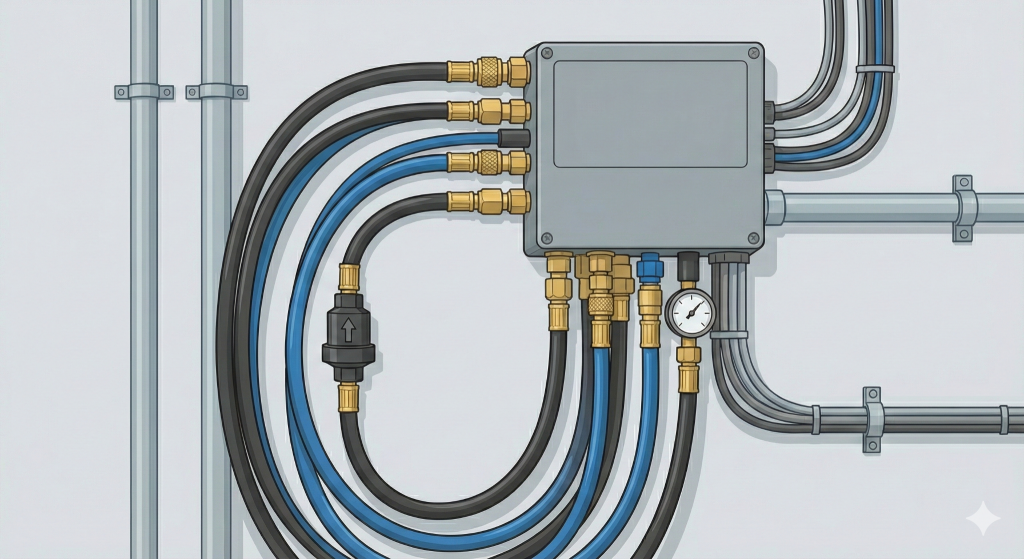
Where the confusion becomes understandable is in hybrid home setups. Some properties have both HVAC equipment and a well system, and homeowners are troubleshooting “water pressure issues” and “HVAC issues” at the same time. The parts are not interchangeable, and the symptoms can overlap in frustrating ways. The best approach is to identify which loop you’re in: refrigerant loop, duct/air loop, hydronic water loop, or well pump plumbing.
Troubleshooting: When A Check Valve Is The Real Culprit
Because check valves are passive, diagnosing them is often about observing what happens when flow changes. In hydronic systems, a stuck-open check valve can allow ghost flow that overheats zones or creates unwanted circulation when a pump is off. A stuck-closed or restrictive check valve can starve a circuit, creating poor heat transfer and temperature imbalance. In duct applications, a stuck damper can create weak exhaust, noise, or drafts. In control-vacuum systems, leakage can cause mode doors to drift or fail to hold position.
A helpful mindset is to look for directionality. Problems that “only happen when flow should stop” often point to a leaking check device. Problems that “only happen when flow should start” can point to a stuck or overly restrictive device. And problems that appear as fluttering, rattling, or chattering often point to turbulence, sizing, or installation location—not necessarily a defective valve.
When It’s Worth Calling A PRO
If you’re dealing with refrigerant circuits, sealed combustion equipment, or any situation where access requires disassembly of critical components, it’s smart to call a qualified HVAC technician. Check valves can be simple, but the systems around them are not always forgiving. A wrong replacement or a poor install can create restrictions, noise, and repeat failures, and in refrigerant work it can also introduce contamination that shortens compressor life.
If you want the job done once, the pro value is usually in diagnosis and context: confirming the correct valve type, confirming the correct direction and placement, and verifying that upstream/downstream conditions won’t make the new part fail again. That’s how a small one-way component stays small—rather than turning into a recurring system problem.